
Have you ever walked out of a meeting thinking, “Well… that didn’t go as planned?”
You knew your proposal was solid. You’d done the research, anticipated the questions and built what you thought was a compelling presentation. Yet somehow, the room remained unconvinced. People nodded politely, thanked you for your time and moved on to the next agenda item – or worse – they just dropped off the Team call! Sound familiar?
If so, you’re certainly not alone.
Every day, talented professionals present excellent ideas that fail to gain traction. Contrary to popular belief, the problem is rarely the idea itself. More often than not, it’s the way the idea has been communicated. This is one of the reasons organisations continue investing in presentation skills workshops. They know that the ability to communicate persuasively is no longer simply a useful business skill. It has become a genuine competitive advantage.
If your idea was brilliant… why didn’t anyone buy it?
Over the past two decades, I’ve worked with thousands of professionals from engineering, finance, healthcare, government, education, technology and professional services. Interestingly, the people who struggle to persuade others are rarely short on expertise. In fact, they’re often the smartest people in the room.
Their challenge isn’t knowledge, it’s translation. They’re trying to transfer what’s in their head into someone else’s head, and that’s much harder than it sounds.
What good is having a brilliant idea if nobody supports it?
Or, perhaps more importantly, what happens when someone with a less impressive idea presents it more persuasively than you do?
Read More: The Complete Guide to New Manager Training for Modern Workplaces
That’s not a comfortable thought… but it’s one worth considering.
Is presenting really just standing up and talking?
Many people assume presenting is simply about speaking confidently in front of a group of people. Well it is that, and a whole lot more!
Nobody books a meeting because they hope everyone leaves with more information. They book a meeting because they want something to happen. They want approval, buy-in, funding, a decision, action.
Every business presentation is trying to change something. It might be changing an opinion, influencing a decision or inspiring people to take action. If nobody changes their thinking, your presentation may have been informative, but it probably wasn’t persuasive.
That’s why a great presentation skills course goes well beyond teaching eye contact, voice projection and slide design. Those skills absolutely matter, but they are only part of the picture. The real skill lies in helping people listen, believe and act.
Can confidence alone win people over?
Confidence is wonderful. I’d much rather watch a confident presenter than an apologetic one, but confidence alone doesn’t persuade.
We’ve all seen confident presenters who spoke for an hour and convinced nobody. Equally, we’ve probably all met quieter people whose ideas carried enormous influence because they understood exactly what their audience needed to hear.
The most persuasive presenters begin long before they open PowerPoint.
They ask questions like:
- Who will be in the room?
- What matters most to them?
- What concerns might they have?
- What evidence will help them trust me?
- What decision do I want them to make?
Notice something? Every question focuses on the audience rather than the presenter and that’s no accident.
Here’s a scary question… are you presenting for yourself or your audience?
One of the biggest breakthroughs delegates experience during my Presentation Skills Training Sydney programs comes when they realise they’ve been designing presentations for themselves instead of their stakeholders.
It’s completely understandable, we naturally explain ideas the way we’d like them explained.
The trouble is, we’re already convinced. Our audience isn’t. Yes, great presenters don’t ask, “What do I want to say?” They ask, “What does my audience need to hear before they’re ready to agree?”
That one question changes everything.
Why do some people need facts while others need a story?
Have you ever noticed how differently people respond to exactly the same presentation?
One executive wants more data, another asks whether it’s been done successfully elsewhere, someone else wants to know how the proposal will affect the team and another is already imagining the exciting possibilities.
Who’s right? All of them. People don’t all make decisions in the same way, so why would we expect them to be persuaded in exactly the same way?
One of the most valuable skills you develop in a presentation skills workshop is learning how to adapt your message without changing your message. The facts stay the same. The way you communicate them changes – that’s persuasion.
Have meetings become the new endurance sport?
Ha ha! I think this question of mine is funny, not funny! Most people don’t wake up thinking: “I hope I get to sit through six PowerPoint presentations today.”
The modern workplace is full of competing priorities, constant interruptions and overflowing calendars. Attention has become one of the most valuable resources in business. Think about the people who seem to influence every meeting they walk into.
Are they always the smartest person in the room? Not necessarily. They are often the clearest, they make complicated ideas easy to understand, they remove confusion, they answer the questions people are already asking themselves and clarity, it turns out, is surprisingly persuasive.
It’s one of the reasons organisations continue investing in presentation training Sydney. Communication is no longer just a presentation skill, it’s a leadership skill.
Would you learn tennis by reading a book?
Reading about presenting is valuable. Listening to podcasts is helpful. Watching TED Talks can certainly be inspiring. But would you expect to become a brilliant tennis player by reading about tennis? Probably not. Presentation skills are performance skills. They improve through preparation, practice, coaching and feedback.
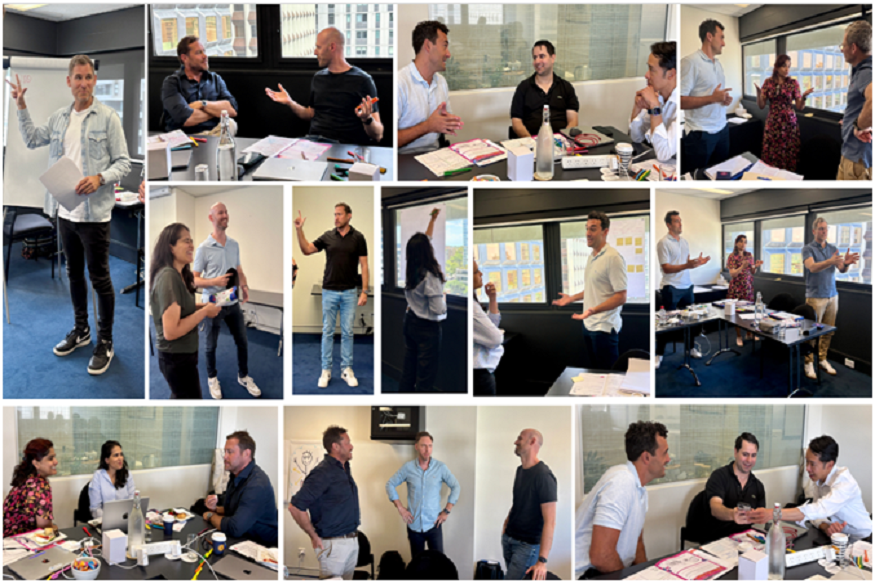
That’s why a practical presentation skills workshop creates such lasting results. Participants prepare real business presentations, present them in a supportive environment, receive personalised coaching and immediately apply what they’ve learned.
There’s nowhere to hide and that’s exactly where the learning happens.
What actually makes someone persuasive?
After working with thousands of professionals, I’ve become convinced that the most persuasive presenters aren’t necessarily the funniest, the loudest or the most charismatic.
- They’re the most adaptable.
- They understand their audience.
- They communicate clearly.
- They know how to simplify complex ideas.
- They build trust.
- And they make it easy for people to say yes.
Isn’t that what every business presentation is really trying to achieve?
Ready to stop presenting and start influencing?
If you’re ready to become a more persuasive presenter, I’d love to welcome you to one of my upcoming public Presentation Skills Training in Sydney.
Read More: Leadership Development Training: Strengthening Your Team’s Potential
Whether you’re presenting to one client, one hundred conference delegates or one very sceptical executive team, the principles are exactly the same. Learn how people make decisions, communicate in ways that people genuinely listen to, believe and act upon, and you’ll discover that presenting becomes far less stressful – and far more enjoyable.
Because your audience doesn’t need another presentation, they need a reason to believe you.
View upcoming dates for my Presentation Skills Training Sydney workshops here:
https://michellebowden.com.au/presentation-skills-training-dates/
About the author
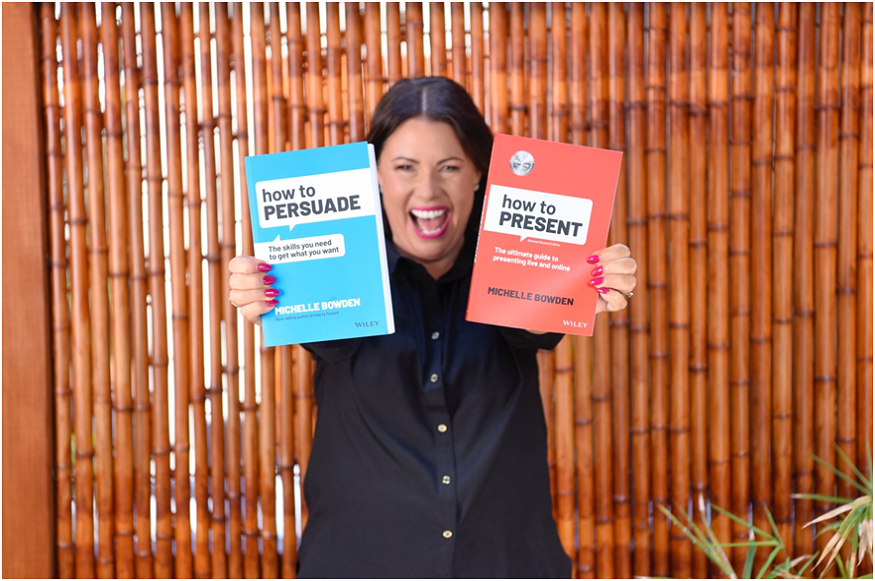
Michelle Bowden is an international keynote speaker, bestselling author and persuasion researcher specialising in business communication. Through her presentation skills training in Sydney, Melbourne and across Australia, she helps professionals present ideas that people listen to, believe and act on. Her practical presentation skills workshops and presentation skills courses have helped thousands of leaders, sales professionals and technical experts become more confident, persuasive and influential presenters.