
Building a career in auditing, fraud examination, information systems auditing or financial crime compliance takes more than work experience alone. Professional certifications can help you develop specialised knowledge, understand industry practices and demonstrate your skills to potential employers. However, choosing the right qualification can be confusing when several options appear relevant to your career goals.
Whether you want to strengthen your internal auditing knowledge, learn more about fraud investigation, or develop expertise in information security, understanding what each certification offers is a useful first step. With a clear career direction and a suitable preparation plan, you can make a more informed decision about your professional development.
Why Professional Certifications Matter for Career Growth
Professional certifications help you build knowledge in a specific area and demonstrate your commitment to developing relevant skills. They can also help you understand professional standards, risk management practices and the responsibilities associated with specialised roles.
Depending on your experience and career interests, a recognised certification may be useful when you want to:
- Develop expertise in a particular professional field.
- Strengthen your understanding of audit, risk or compliance.
- Prepare for responsibilities that require specialised knowledge.
- Demonstrate your commitment to continuing professional development.
- Explore opportunities across industries and international markets.
A certification does not guarantee a job or promotion. Your practical experience, communication skills and ability to apply your knowledge remain important. The right qualification should complement your career goals rather than simply add another credential to your CV.
Which Professional Certification Should You Choose?
Different certifications focus on different professional responsibilities. Understanding their areas of specialisation can help you select the one that best fits your interests.
Certified Internal Auditor (CIA)
The Certified Internal Auditor (CIA) certification is designed for professionals interested in internal auditing. It covers areas such as governance, risk management, internal controls, and audit engagements offered by The Institute of Internal Auditors (The IIA)
The CIA may suit you if you want to develop your understanding of internal audit practices, assess organisational risks and contribute to stronger business controls.
Certified Fraud Examiner (CFE)
The Certified Fraud Examiner (CFE) credential focuses on fraud prevention, detection and investigation. Its subject areas include fraud schemes, investigation techniques, legal considerations, and fraud prevention, and it is awarded by ACFE (Association of Certified Fraud Examiners).
You may find this qualification relevant if your interests include fraud risk management, forensic accounting, corporate investigations, or financial misconduct.
A strong foundation in analytical thinking and attention to detail can be useful when studying fraud-related concepts and applying them to practical situations.
Certified Anti-Money Laundering Specialist (CAMS)
The Certified Anti-Money Laundering Specialist (CAMS) certification focuses on anti-money laundering and financial crime compliance, offered by ACAMS (Association of Certified Anti-Money Laundering Specialists)
It may be relevant if you want to work in AML compliance, customer due diligence, transaction monitoring, or financial crime risk management. The subject matter helps you understand how financial institutions identify suspicious activity and maintain appropriate compliance controls.
If you work in banking or financial services, consider whether AML expertise aligns with the responsibilities you want to take on in the future.
Certified Information Systems Auditor (CISA)
The Certified Information Systems Auditor (CISA) certification awarded by ISACA (Information Systems Audit and Control Association) focuses on information systems auditing, IT governance, information security and technology-related risk.
It can be relevant if you are interested in auditing IT systems, reviewing technology controls or assessing whether information systems support business objectives securely and effectively.
As organisations increasingly depend on digital systems, understanding technology risks can be valuable across many industries.
How to Choose the Right Certification for Your Career
The best certification depends on the kind of work you want to do. Instead of choosing a qualification because it is popular, consider the skills and responsibilities associated with your preferred career path. Start by asking yourself three questions:
- Which area interests you most?
If you enjoy reviewing business processes and controls, the CIA may be a suitable option. If fraud investigation interests you, consider the CFE. For financial crime compliance, explore CAMS, while CISA may be appropriate for IT audit and information systems assurance.
- What qualifications and experience do you already have?
Review the eligibility requirements for each certification. Your education, professional background, and existing skills may influence which option is most practical for you.
- How much time can you dedicate to preparation?
Consider your work schedule, examination requirements and preferred learning method. A realistic study plan is easier to maintain than an ambitious timetable that leaves little room for revision.
Preparing for an International Certification Exam
Once you have chosen a certification, the next step is to organise your preparation. A structured approach can help you cover the syllabus while balancing work and personal commitments.
- Review the official syllabus: Understand the subjects and examination requirements before selecting study materials.
- Create a realistic timetable: Divide the syllabus into manageable weekly targets.
- Use suitable learning resources: Choose current study materials, video lectures or guided training that match your learning style.
- Practise exam-style questions: Identify weak areas and learn why particular answers are correct.
- Schedule regular revision: Revisit difficult topics and track your progress before booking the exam.
Avoid collecting too many books and courses at the same time. A small set of reliable resources, combined with regular practice, can make your preparation easier to manage.
How AIA Supports Professional Certification Preparation
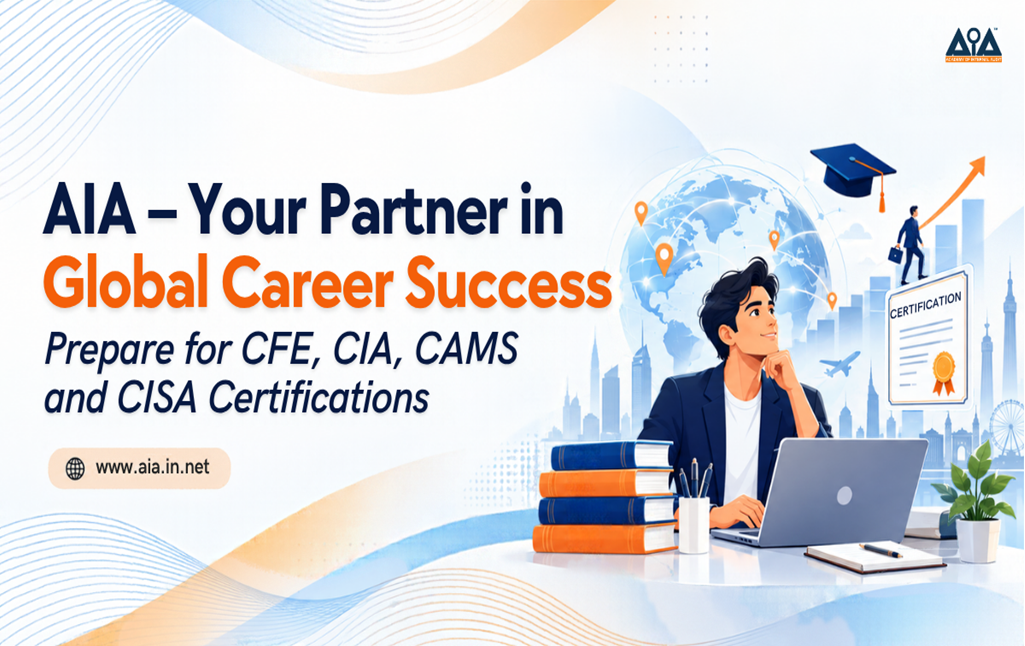
Finding the right learning support can help you stay organised and understand difficult concepts during exam preparation. The Academy of Internal Audit (AIA) provides training and learning resources for professional certifications, including CIA, CFE, CAMS and CISA.
Through structured preparation resources and exam-focused learning support, AIA aims to help learners build relevant knowledge and work towards their professional goals. You can explore the available courses and resources on the Academy of Internal Audit website to see which learning options align with your chosen certification.
When comparing training providers, look at syllabus coverage, teaching methods, practice questions, revision support, and access to learning materials. These details can help you decide whether a programme fits your needs.
Final Thoughts
Professional certifications can be a useful part of your career development when they match your interests and long-term goals. The CIA, CFE, CAMS and CISA credentials each focus on a different area, so understanding their purpose can help you choose more confidently.
Take time to review the official requirements, assess your current skills, and plan your preparation around your daily commitments. With the right qualification, relevant experience, and a consistent approach to learning, you can work towards building a stronger professional profile and exploring opportunities in your chosen field.